
Swiss-Made Managed SASE – Why Sovereignty, Quality and Trust Define the Future of IT Infrastructure
 Stefan Keller, Chief Product Officer
When IT infrastructure fails, it rarely fails quietly. It disrupts production lines. It halts remote access. It triggers compliance escalations. It lands on the board agenda.
In a world shaped by geopolitical uncertainty, tighter cybersecurity regulation and increasingly complex hybrid environments, companies are asking a new question:
Not just “Which SASE architecture do we adopt?” But “Who builds and operates it – and under which standards?”
This makes the recent achievement of the Swiss Made Software label by Open Systems more than a certification milestone. It is a statement about how modern Managed SASE should be engineered, delivered and operated. Read the official announcement here.
In this article, we explain:
- What the Swiss Made Software label means
- Why Swiss-made matters specifically in the SASE and IT infrastructure context
- What Swiss-made means for Open Systems Managed SASE in practice
- Why Swiss-made Managed SASE is the service of choice – and what customers gain
- Why Swiss-made should be something you actively look out for – especially compared to European or American alternatives
The Swiss Made Software Label – What It Means
“Swiss-made” is not a branding flourish. In Switzerland, origin labels are legally protected and culturally loaded. The Swiss Made Software label defines clear criteria, including:
- A significant portion of development and value creation taking place in Switzerland
- Core engineering expertise located in Switzerland
- The company being headquartered and governed under Swiss law
- A commitment to Swiss standards of quality, precision and transparency
This matters because digital infrastructure is no longer just technology. It is governance.
When a service provider carries the Swiss Made Software label, it signals:
- Clear jurisdiction
- Clear accountability
- Transparent origin of intellectual property
- Engineering discipline rather than ad-hoc integration
And in an era where supply chains and vendor ecosystems stretch across continents, that clarity is not trivial.
Why Swiss-Made Matters in the SASE Context
Managed SASE sits at the heart of modern IT infrastructure. It converges:
- SD-WAN
- Zero Trust Network Access
- Secure Web Gateway
- CASB
- Firewall
- Network Detection and Response
- Global connectivity
In short – it connects users, applications, data, sites and cloud environments.
Now consider the regulatory and operational backdrop.
According to the 2025 Open Systems survey on EU cybersecurity regulations, a large majority of European IT leaders say that regulations such as NIS2 and DORA significantly influence infrastructure strategy and vendor selection decisions.
That tells us something important: Infrastructure decisions are no longer purely technical. They are compliance decisions. Risk decisions. Governance decisions.
In that context, Swiss-made becomes highly relevant because:
- Switzerland is politically neutral and economically stable
- It maintains strong data protection traditions
- It is not part of EU or US extraterritorial legislation frameworks in the same way as American vendors
- It has a global reputation for precision, reliability and rule-based governance
For SASE – a service that sits between users and everything they access – origin and operational transparency are not secondary factors. They are risk controls.
What Swiss-Made Means for Open Systems Managed SASE
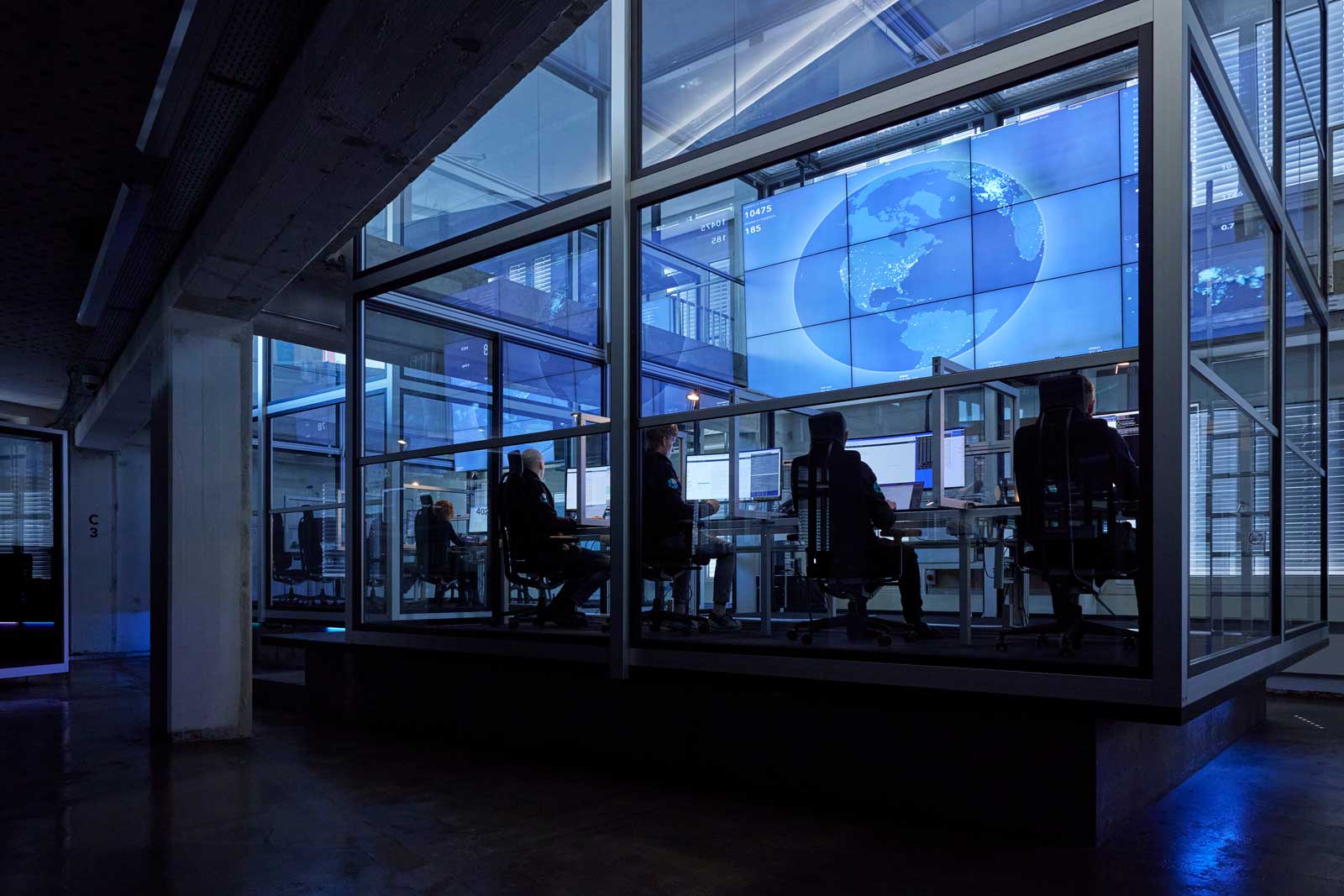
Swiss-made is not limited to a development office address. It permeates the entire Managed SASE lifecycle – software, deployment and operations.
1. Swiss-Engineered Software Stack
Swiss-made Managed SASE begins with engineering discipline.
Instead of stitching together disconnected point products, Open Systems:
- Carefully selects best-of-breed components and open-source technologies
- Integrates them according to strict architectural standards
- Enhances them with proprietary monitoring, telemetry and automation layers
- Designs the platform with operations in mind from day one
A practical example:
Many organizations adopting SASE discover that integrating SD-WAN telemetry with security alerting requires manual correlation across dashboards. Swiss-engineered integration eliminates that friction by unifying data flows and observability into a single operational model.
The result is not just functional SASE. It is operationally sustainable SASE.
2. Sovereign and Flexible Deployments
Swiss-made also shapes how Managed SASE is deployed.
Open Systems offers:
- End-to-end architecture design
- Project management handled by experienced teams
- Deployment in cloud, hybrid or fully on-prem scenarios
- On-prem options specifically for sovereignty or regulatory requirements
- Local language support in German, French and English
Imagine a financial services provider preparing for DORA audits. Data location transparency, vendor governance and clear service responsibility are not theoretical concerns – they are audit questions.
Swiss-made deployment means those answers are clear, documented and defensible.
3. Swiss-Led Global Operations
Operations are where theory meets reality.
Open Systems runs 24×7 operations with Swiss governance and follow-the-sun coverage supported by teams in Switzerland and Hawaii.
What makes this distinctive is the operating model:
- Engineers are directly involved in operations
- Swarming is preferred over hierarchical ticket bouncing
- Monitoring and alerting are deeply integrated into the platform
This reduces:
- Escalation layers
- Time to resolution
- Organizational friction
In practical terms, when a manufacturing customer experiences connectivity anomalies across multiple sites, response does not require three vendor handoffs. The same organization that engineered the stack operates it.
That alignment is not accidental. It is Swiss-engineered.
Why Swiss-Made Managed SASE by Open Systems Is the Service of Choice – Customer Benefits
Swiss-made is meaningful only if it translates into measurable value.
Here is what customers gain.
Transparency and Audit Confidence
Customers know:
- Under which jurisdiction the service operates
- Where development and governance reside
- Who is accountable in case of incidents
This simplifies compliance reviews and reduces legal ambiguity.
Operational Reliability
Because engineering and operations are aligned:
- Downtime risk decreases
- Security policy enforcement is consistent
- Detection and response cycles are faster
For globally distributed organizations, that reliability directly impacts productivity and revenue.
Reduced Internal Complexity
Instead of coordinating multiple vendors for networking and security, customers receive:
- A unified Managed SASE platform
- A single SLA
- 24×7 support
- Clear escalation paths
This reduces the operational burden on internal teams – particularly important in times of cybersecurity talent shortages.
Sovereign Flexibility
Organizations with strict data residency or sovereignty requirements can:
- Choose on-prem or hybrid deployment models
- Maintain greater control over sensitive workloads
- Align infrastructure decisions with board-level governance strategies
Long-Term Future-Proofing
Swiss-made Managed SASE is built on:
- Open standards
- API-based automation
- Integrated telemetry
- Continuous platform evolution
This ensures adaptability as architectures and regulations evolve.
In short – Swiss-made Managed SASE delivers stability without rigidity.
Why Swiss-Made Should Be Something You Actively Look Out For
Vendor origin used to be a secondary filter. It no longer is.
Swiss vs European Alternatives
European vendors operate under strong regulatory frameworks. However, the Swiss Made Software label adds:
- A formally recognized origin standard
- Clear engineering investment thresholds
- A globally respected quality reputation
For companies operating in DACH and across Europe, this offers regulatory alignment combined with recognized precision.
Swiss vs American Alternatives
American vendors dominate the cloud and cybersecurity landscape. But they often operate under:
- Different extraterritorial legal frameworks
- Complex global supply chains
- Distributed development models
For some regulated industries, this introduces additional compliance considerations.
Swiss-made offers:
- Neutral jurisdiction
- Strong data protection culture
- Clear governance visibility
- Independence from larger geopolitical power blocs
For boards evaluating long-term infrastructure risk, that neutrality can be strategically attractive.
Conclusion: Swiss-Made as a Strategic Infrastructure Decision
Managed SASE is not just another IT service. It is the connective tissue of the modern enterprise.
When infrastructure sits at the intersection of users, cloud applications, remote access and compliance obligations, trust becomes architectural.
The Swiss Made Software certification confirms that Open Systems Managed SASE is:
- Engineered with discipline
- Governed with transparency
- Operated with accountability
- Designed for regulatory and operational resilience
In a world where infrastructure risk equals business risk, Swiss-made is not a marketing label.
It is a strategic choice for organizations that value sovereignty, clarity and long-term trust in their IT foundation.
Leave Complexity
Behind
To learn how Open Systems SASE Experience can benefit your organization, talk to a specialist today.
Contact Us