

95% of AI Pilots Fail. Here’s What We Learned Getting AI Adoption in a Regulated Enterprise.
 Open Systems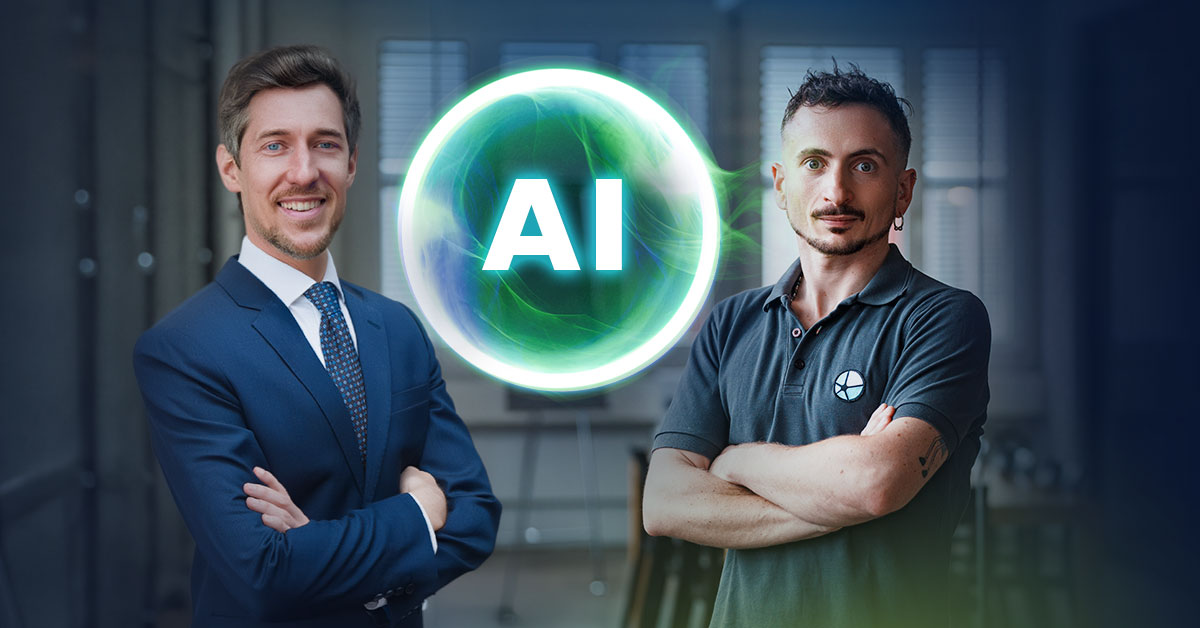
Authors: Niccolò Baldoni, Patrick Reiter
The AI industry loves talking about models. Every week brings a new announcement, a new benchmark, or a new prediction about how AI will transform the way we work.
But after spending the last several months driving AI adoption across a regulated, global organization, we have come to a different conclusion: Most AI initiatives don’t fail because of technology. They fail because organizations approach AI as a software rollout instead of a transformation effort.
According to MIT research, up to 95% of AI pilots fail to deliver meaningful business impact. Looking back, we understand why. We were fortunate enough to see adoption rates soaring high within the first 90 days. Not because we had access to better technology than everyone else, but because several of our assumptions turned out to be completely wrong.
Here are seven lessons that surprised us along the way.
1. Curiosity Scales. Mandates Don’t.
Like many organizations, we initially considered a familiar approach: distribute licenses, schedule mandatory workshops, track attendance, and hope adoption follows.
Instead, we did the opposite. Company-wide, we launched short, voluntary “AI Espresso” sessions. Fifteen minutes, with practical examples, no obligation to attend. To be honest, we weren’t sure how much interest there would be.
What happened surprised us. People showed up because they wanted to. They brought colleagues. Discussions continued after the sessions ended. Teams started exchanging ideas and use cases on their own.
We’ve been involved in plenty of training and transformation initiatives over the years. We’ve rarely seen that kind of organic momentum emerge from something mandatory. That was probably the first moment we realized this might actually work.
2. Don’t Separate Beginners and Experts
One of our first ideas was to create different tracks for different audiences. Beginners would get foundational training, more advanced users would focus on complex use cases.
It sounded reasonable. Instead, we decided to bring both groups together. The result was far better than we expected.
Beginners asked questions experts hadn’t thought about for months. Experienced users demonstrated practical use cases that made AI feel less intimidating. Both groups learned from each other.
Designing sessions that worked for everyone wasn’t easy. More than once we wondered whether we’d made things unnecessarily complicated. Looking back, it was absolutely worth it. Because some of the most valuable discussions happened because people with completely different levels of experience were sitting in the same room.
3. The Model Isn’t the Most Important Part
This one may be controversial. Most conversations about AI eventually end up focusing on models. Which model is best? Which platform is leading? Which vendor is moving fastest? While those questions matter, they mattered far less than we expected.
The conversations that actually determined success were usually about something else entirely: workflows, data access, context, ownership, and how people could use the technology in their daily work.
Vendor demonstrations often make implementation look straightforward. Reality is messier, especially in large organizations with regulatory requirements, established processes, and multiple stakeholder groups.
Looking back, operational questions consistently mattered more than technical ones.
4. Compliance Became an Accelerator
This was probably the biggest surprise: We assumed compliance would slow everything down. In a regulated environment, every AI interaction touches data classification, governance requirements, security policies, and risk management considerations. So naturally, we expected resistance.
Instead, compliance helped build trust. Once people understood where guardrails existed, what data could be used, and who was responsible for what, much of the hesitation disappeared.
The conversations became easier because employees felt confident they weren’t navigating unfamiliar territory alone.
Many organizations view compliance as friction. Our experience was that it provided a foundation people could trust.
5. Communities Drive Change
Technology projects often focus on platforms, training plans, and implementation milestones. What made the biggest difference for us was community.
We created a network of volunteer AI champions – aka our “AI Baristas” – who helped colleagues explore use cases, answer questions, and share ideas. What started as a small group quickly gained momentum. Our internal AI community became one of the largest collaboration spaces in the company. People shared prompts, discussed challenges, exchanged ideas, and helped each other learn. Even members of the executive team participated regularly.
Some of the most memorable moments had nothing to do with technology: Hackathons, informal meetups, pizza from the local place around the corner, craft beer from a colleague’s brewery, and homemade tiramisu prepared by our CISO.
Nobody was required to attend. But by month two, we had waiting lists. That still makes us smile.
6. The Skeptics Matter Most
Every transformation initiative has skeptics. That’s not a problem. In fact, we’ve come to believe it’s a good sign.
The moment that convinced us we were making real progress wasn’t an adoption metric or a dashboard report. It was watching one of our strongest critics become one of the most active contributors in the community. We remember thinking: if we’ve won this person over, something meaningful is happening.
The reason was simple. They weren’t participating because somebody told them to. They were participating because they had found value themselves. When that happens, momentum starts becoming self-sustaining.
7. AI Transformation Looks More Like a Campaign Than a Deployment
The biggest lesson of all? Successful AI adoption has much more in common with running an internal campaign than deploying software. You need executive sponsorship, communication, people sharing success stories, fresh ideas and new examples on a regular basis, and most importantly, you need consistency.
We expected that enthusiasm would fade after a few months. That’s what usually happens with internal initiatives. It didn’t. Not because we found the perfect technology, but because people kept discovering new ways to make it useful.
For Patrick as a project management director rather than an AI engineer, this was perhaps the most important takeaway: The technology matters, but it isn’t the deciding factor.
Accountability Still Determines Outcomes
As organizations move from experimentation to operational use, another challenge emerges: governance. Technology can enable remarkable things. But long-term success depends on how organizations manage it, secure it, and embed it into everyday operations.
As Markus Ehrenmann, CTO at Open Systems, puts it:
“Most organizations spend a lot of time evaluating technology. The harder question is how that technology will actually be used, governed, and operated once the initial excitement fades. That’s usually where success or failure is decided.”
AI can improve productivity, accelerate decision-making, and help teams work more effectively. But none of that removes the need for ownership, accountability, and clear operational frameworks. If anything, it makes them more important.
Final Thoughts
Looking back, the most surprising lesson is how little this story is actually about AI. It’s a story about people, trust, and creating an environment where experimentation feels safe and useful. And it’s about recognizing that successful transformation rarely happens because a new technology arrives.
It happens because people decide to embrace it. The technology may start the conversation. But people determine how the story ends.
More information:

Leave Complexity
Behind
To learn how Open Systems SASE Experience can benefit your organization, talk to a specialist today.
Contact Us