AI Is Changing Cybersecurity. Accountability Still Decides If It Works.
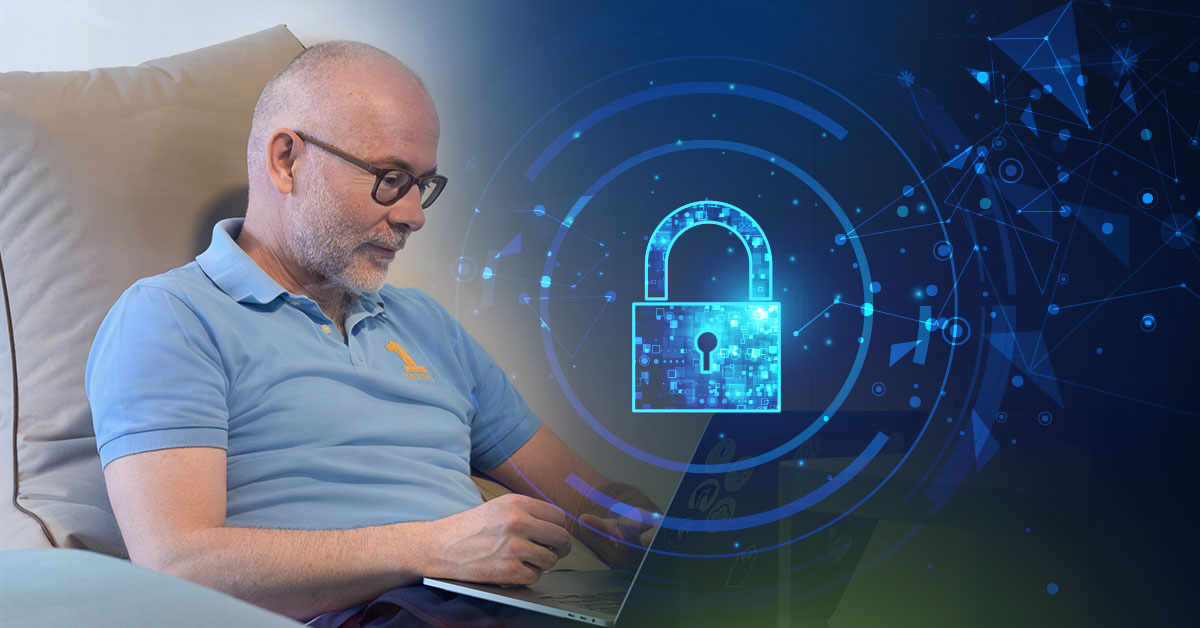
Most organizations don’t have a cybersecurity technology problem. They have more tools than ever. Many of them are already powered by AI. Systems detect anomalies faster, prioritize risks better, and automate responses in real time. So on paper, security has never been more advanced. And yet, the real question hasn’t changed. Who is actually responsible for security?
The Shift AI Creates
AI is reshaping how security works. It processes signals at scale, it reduces noise, and it accelerates decisions. That matters, because modern environments are too complex to manage manually.
But AI doesn’t remove complexity, it redistributes it from detection to decision-making to accountability.
Where Most Organizations Get Stuck
In many environments, security decisions are increasingly influenced or even executed by automated systems. But when something goes wrong, things become unclear fast:
-
Why was this decision made?
-
Was it the tool? The policy? The configuration?
-
Who is accountable for the outcome?
The problem isn’t that AI is unreliable. The problem is that ownership is often undefined**.** And without ownership, there is no real security, only the illusion of it.
Technology Doesn’t Build Trust. Operations Do.
Trust in security has never been about tools alone. It’s about control, visibility, and consistency. And most importantly: continuous operation.
Security doesn’t fail because technology is missing. It fails because systems are not operated in a controlled, accountable way.
That gap becomes more critical as AI is introduced. Because automation without oversight doesn’t reduce risk; it scales it.** **
AI Needs an Operating Model
To make AI work in cybersecurity, organizations need more than capabilities:
-
Clear ownership of decisions
-
Continuous monitoring and validation
-
The ability to intervene, adapt, and take control at any time
In other words: AI needs to be operated, not just deployed.
Why This Matters Now
Work is no longer tied to a location. Access happens from anywhere. Environments are distributed across networks, cloud, and users. Security is no longer a static architecture. It is a live system. And live systems require constant control, all the more as AI evolves rapidly.
AI is making cybersecurity faster. But speed doesn’t create trust. Accountability does. That’s why the real question isn’t what technology you use. It’s whether someone is actually running your security, end to end, 24x7.
Read next.
Beyond Human-in-the-Loop: How Guided GenAI and Accountability by Design Are Shaping the Future of Cybersecurity
How Guided GenAI and Accountability by Design strengthen modern cyber defense: reducing alert fatigue, increasing transparency, and embedding clear accountability into AI-driven security operations.
Meet Lucy: How AI-Powered Self-Service Enables Operational Simplicity and a Seamless Support Experience
Modern network and security services are expected to be fast, intuitive, and always available. Yet when something goes wrong, customers often encounter fragmented workflows, unclear next steps, and unnecessary friction when dealing with the operation team.
AI in Security Must Stay Accountable
Explore how AI in security is transforming threat detection and response for enhanced safety and protection.