

Beyond Human-in-the-Loop: How Guided GenAI and Accountability by Design Are Shaping the Future of Cybersecurity
 Markus Ehrenmann, CTO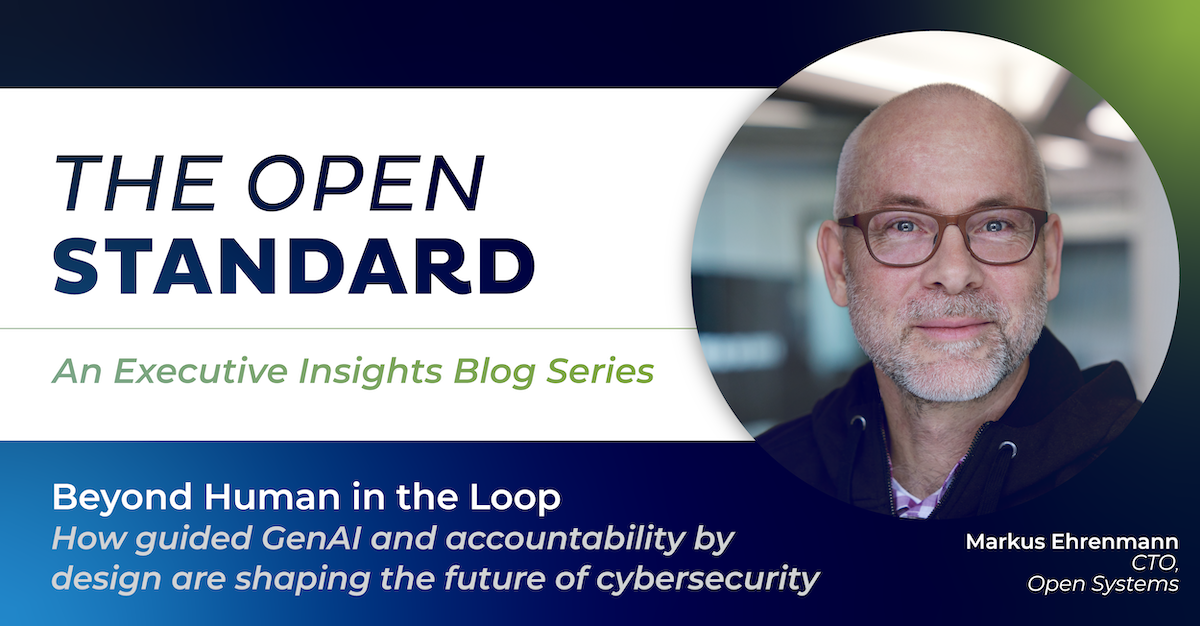
When a cyberattack hits, every second counts. Security teams must detect, decide and respond at machine speed, often under pressure and with incomplete information. It’s no surprise that AI has become a powerful ally in modern cyber defense.
But there’s a catch: AI that is deployed without the right safeguards can introduce new risks, blind spots and accountability gaps. The question is no longer whether to use AI in cybersecurity, but how to use it responsibly and effectively.
For years, many organizations have relied on a “human-in-the-loop” model. In this setup, AI systems generate alerts or recommendations, and human analysts review and approve the decisions. On paper, this sounds like the perfect balance between automation and oversight. In practice, however, this model often struggles.
The Limits of Human-in-the-Loop
Two common failure modes appear again and again:
- Automation complacency
When AI performs well most of the time, human engagement can gradually decline. Analysts may begin to trust the system by default, intervening less critically or less frequently. - Alert fatigue
On the other hand, some systems overwhelm analysts with large volumes of alerts to validate. Over time, this leads to fatigue, slower reactions and a higher chance of missing real threats.
In both cases, the human-in-the-loop model can unintentionally undermine the very human judgement it aims to protect.
From Oversight to Guidance: The Role of Guided GenAI
A more effective approach is emerging: Guided Generative AI.
Guided GenAI systems do more than output decisions. They provide context and reasoning. They explain why a measure is recommended, surface uncertainties or anomalies, and make their logic understandable to human operators.
Just as importantly, they direct human attention where it matters most. Instead of asking analysts to review everything, they highlight the incidents that truly require human judgement. This reduces background noise and creates a more consistent, reviewable decision basis.
The result is not less human involvement, but better-focused human involvement.
Building Responsibility In: Accountability by Design
Technology alone is not enough. To use AI responsibly in cybersecurity, organizations also need structural clarity around responsibility. This is where Accountability by Design comes in.
Accountability by Design means that responsibility is built into the system from the start through:
- Clear protocols
- Transparent decision chains
- Defined escalation paths
- Full auditability of actions and recommendations
Responsibility is not left to individuals to carry alone, nor is it obscured by complex automation. Instead, it is distributed and documented in a structured way.
In this model, humans remain in control of intent, interpretation, ethics and prioritization, while AI handles scalable, consistent and traceable execution.
Dynamic Oversight for Real-World Security
Not every situation carries the same risk, and oversight should reflect that. A modern AI-driven SOC can adapt its level of human supervision dynamically:
- In high-risk or ambiguous scenarios, analyst approval may be required.
- In lower-risk or well-defined cases, systems may act autonomously.
- In all cases, actions remain auditable and transparent.
This flexible model aligns oversight with actual risk and context, rather than applying a one-size-fits-all rule.
Reducing Cognitive Load, Increasing Resilience
A realistic and sustainable supervision model is crucial. If human oversight turns into repetitive box-ticking, it creates blind spots rather than safety.
By replacing monotonous control tasks with targeted review mechanisms, organizations can:
- Lower cognitive load on security teams
- Improve decision quality
- Increase operational resilience
- Use AI in a way that is both effective and responsible
A More Mature Model for AI in Cybersecurity
The future of AI in cybersecurity is not about replacing humans or keeping them artificially in every loop. It’s about designing systems where humans and AI each do what they do best.
Guided GenAI combined with Accountability by Design represents a more mature model: one that acknowledges real-world pressures, supports human expertise and ensures responsibility remains clear and traceable.
As cyber threats continue to evolve, organizations that adopt this balanced approach will be better positioned to respond quickly, act responsibly and build lasting trust in their security operations.

Leave Complexity
Behind
To learn how Open Systems SASE Experience can benefit your organization, talk to a specialist today.
Contact Us